
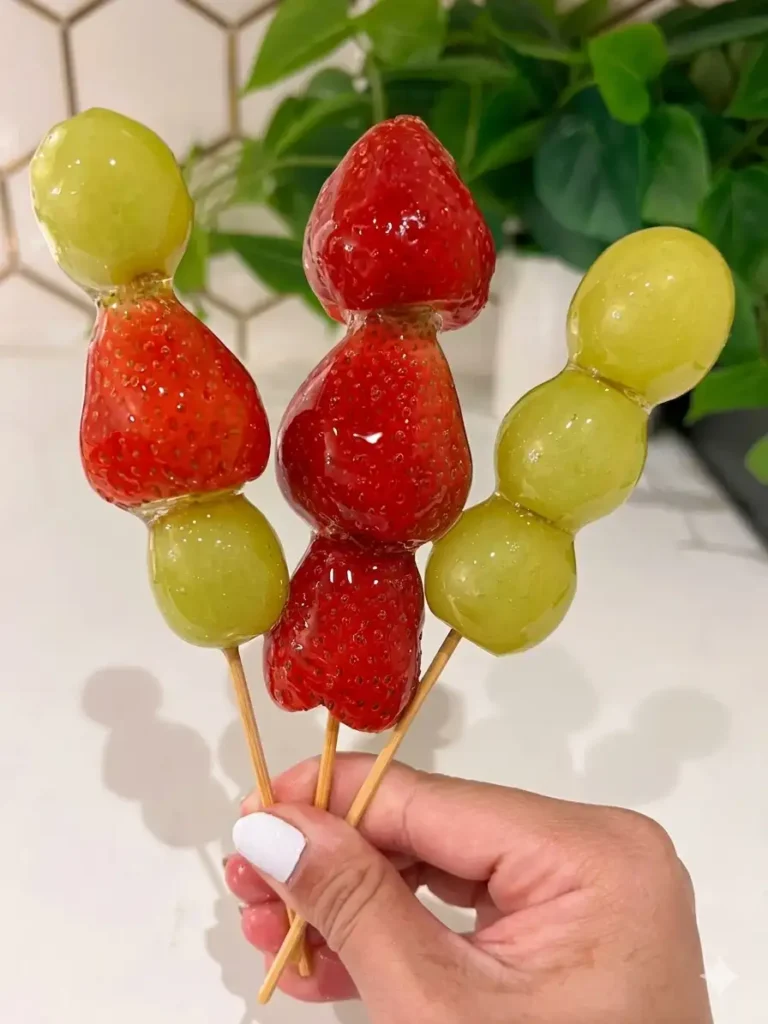
Tanghulu is a fun and beautiful Chinese street snack that turns simple fruit into shiny, crunchy candy. You’ll love making it because it feels like a little kitchen magic when the sugar hardens into a glass-like coating. It’s perfect for families since kids enjoy watching the process and eating the sweet, crisp fruits. You can use strawberries, grapes, or any firm fruit you like, which makes it very flexible. It’s also great for parties, adding a colorful and exciting touch to your dessert table.
why make this recipe
Tanghulu is a delightful treat that brings together the sweetness of fruits and the crunchiness of hard candy. Originating from China, this famous street food captivates both locals and visitors. It is not only visually appealing but also fun to make! The shiny, sweet-coated fruits make a perfect snack or a creative dessert for gatherings. Plus, you can choose your favorite fresh fruits, making it a customizable option for everyone.
how to make Tanghulu
Making Tanghulu is quite simple, and you only need a few ingredients. Follow these directions for a delicious batch of candied fruits!
Ingredients
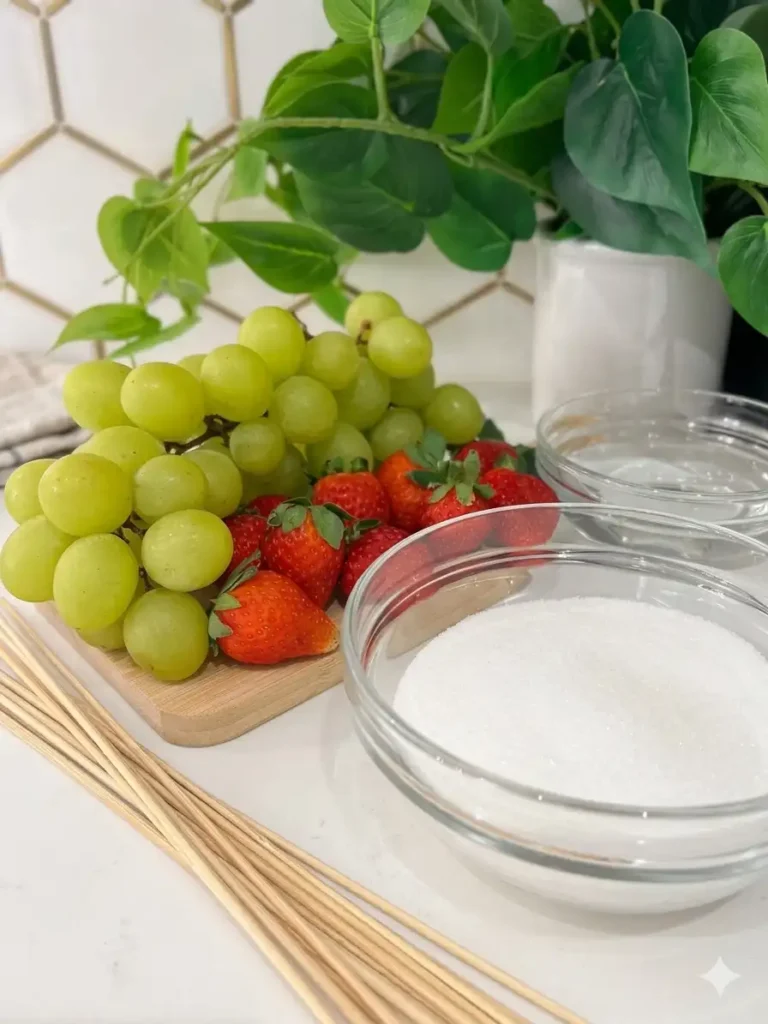
- 1 lb strawberries, grapes, or other fruit of choice (~30 pieces)
- 2 cups white sugar
- 1 cup water
Directions
- Wash the Fruit: Start by washing your chosen fruit thoroughly and patting it dry. Be sure to remove any leaves, stems, or inedible parts.
- Skewer the Fruit: Place the fruit onto skewers. It’s best to use 3 pieces or less per skewer to make handling easier.
- Make the Syrup: In a small pot, add the sugar and water over low to medium heat. Do not stir at this stage. Allow it to boil and simmer until the mixture becomes thick and amber in color. This process will take about 10–20 minutes, reaching approximately 300°F.
- Test the Syrup: Check the syrup’s temperature by drizzling a spoonful into an ice water bath. If it hardens quickly and cracks when bent, it’s ready.
- Dip the Fruit: Quickly dip each fruit skewer into the syrup and swirl it around to coat it evenly. Then immediately dip it in the ice water bath to cool and harden the sugar coating.
- Set Aside: Place the skewers onto a plate and repeat the process with the remaining fruit. Work fast so the sugar doesn’t burn.
- Enjoy: Your Tanghulu is now ready to eat! Enjoy this crunchy, sweet treat.
how to serve Tanghulu
Tanghulu is best served fresh, as the crunchy candy coating is most delightful right after preparation. You can serve them on a colorful plate or even in a fun display for parties or gatherings. These candied fruits also make for a lovely decoration at any dessert table.
how to store Tanghulu
If you have leftover Tanghulu, store them in a cool, dry place. It’s best not to refrigerate them, as moisture can ruin the hard candy coating. Keep them in an airtight container to maintain their crunchiness and freshness for a couple of days.
tips to make Tanghulu
- Use fruits that are firm and not overly ripe to avoid them breaking apart during skewering.
- Work quickly when coating the fruit, as the syrup can harden if left too long.
- Experiment with different fruits! You can also try using kiwi, cherry tomatoes, or even slices of apple.
variation
While traditional Tanghulu is made with fruits, you can also coat nuts or small candies in syrup for a different twist. This adds variety and can cater to various tastes.
FAQs
1. Can I use other fruits for Tanghulu?
Yes! You can use strawberries, grapes, cherry tomatoes, or any firm fruit you prefer.
2. Why doesn’t the syrup stick to the fruit?
Ensure that the fruit is completely dry before dipping. Any moisture can prevent the syrup from adhering properly.
3. How do I know when the syrup is ready?
Test the syrup by drizzling it into an ice water bath. It should harden quickly and be able to crack when bent. If it’s still runny, let it boil for a bit longer.
For more delightful recipes and ideas for healthy eating, check out various high-protein recipes that you can explore! Enjoy making and savoring your homemade Tanghulu!
Tanghulu
Ingredients
Main Ingredients
- 1 lb strawberries, grapes, or other fruit of choice (~30 pieces)
- 2 cups white sugar
- 1 cup water
Instructions
Preparation
- Wash the fruit thoroughly and pat it dry. Remove any leaves, stems, or inedible parts.
- Skewer the fruit, using 3 pieces or less per skewer for easier handling.
Cooking
- In a small pot, combine sugar and water over low to medium heat without stirring. Allow it to boil and simmer until the mixture thickens and turns amber in color, about 10–20 minutes, reaching approximately 300°F.
- Check the syrup's temperature by drizzling a spoonful into an ice water bath; if it hardens quickly and cracks when bent, it’s ready.
Coating
- Quickly dip each fruit skewer into the syrup, swirl to coat evenly, and immediately dip into the ice water bath to cool and harden the coating.
- Place the skewers onto a plate and repeat the process with remaining fruit, working quickly to prevent burning the sugar.
Serving
- Serve Tanghulu fresh for the best crunchy texture. Display them on a colorful plate or as part of a dessert table.